What is Energy Balance?
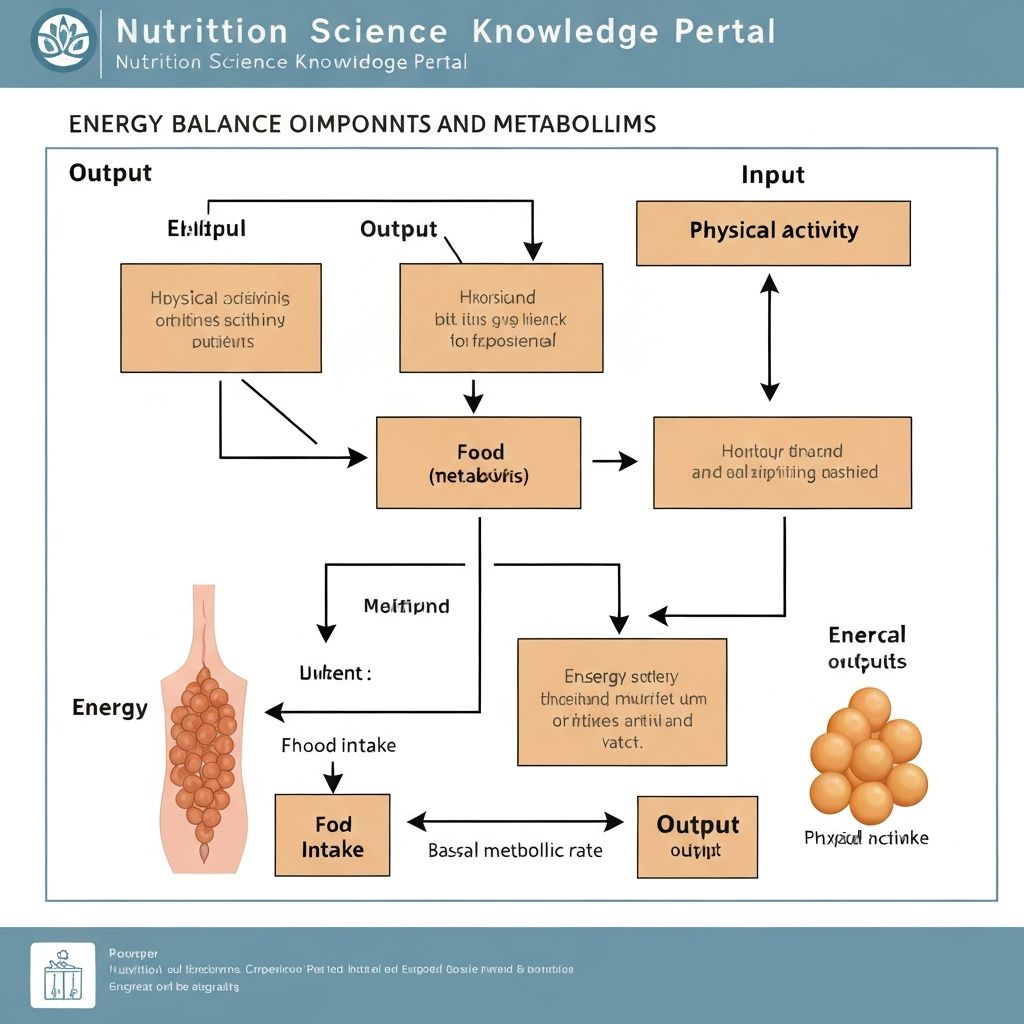
Energy balance is a fundamental concept in nutrition science, describing the relationship between energy intake (calories from food) and energy expenditure (calories burned through bodily functions and activity). This concept provides a framework for understanding how bodies maintain or change weight.
The Three Components of Energy Expenditure
Total daily energy expenditure consists of three primary components:
1. Basal Metabolic Rate (BMR)
The energy required to maintain basic physiological functions at rest—including breathing, circulation, cellular function, and temperature regulation. BMR typically accounts for 60-75% of total daily energy expenditure in sedentary individuals.
2. Thermic Effect of Food (TEF)
The energy required to digest, absorb, and process nutrients from food. TEF varies by macronutrient—protein requires more energy to process than carbohydrates or fats. TEF typically accounts for 8-15% of total daily energy expenditure.
3. Activity Energy Expenditure
Calories burned through intentional exercise and daily movement. This component varies greatly between individuals based on activity level and exercise frequency.
Understanding Calories
A calorie is a unit of energy. In nutrition science, "calories" refer to kilocalories (kcal)—the energy required to raise the temperature of one kilogram of water by one degree Celsius.
Macronutrient Energy
Protein: 4 calories per gram | Carbohydrates: 4 calories per gram | Fats: 9 calories per gram | Alcohol: 7 calories per gram
Energy Calculation
Total calories in food are calculated by multiplying grams of each macronutrient by their energy values, then summing these values.
Individual Variation
Caloric needs vary significantly between individuals based on genetics, body composition, age, sex, and activity level.
Metabolism Explained
Metabolism refers to all biochemical processes that convert food into energy and building materials for cells. It encompasses thousands of chemical reactions happening continuously throughout the body.
Metabolic Rate
Metabolic rate is influenced by several factors including age, sex, body composition, genetics, hormonal status, physical activity, and nutritional status. While metabolic rate varies between individuals, it is relatively stable within an individual when other factors remain constant.
Common Misconceptions
- Myth: Metabolism dramatically slows with age. While metabolism does decrease slightly with age, this is largely due to loss of muscle mass, a modifiable factor through activity.
- Myth: Skipping meals speeds metabolism. Meal frequency has minimal effect on metabolism; total daily intake matters more.
- Myth: Certain foods have "negative calories." All foods provide net calories; however, some do require more energy to digest (high TEF).
- Myth: You can't change your metabolism. While you cannot dramatically change genetic factors, lifestyle habits significantly influence metabolic function.
Energy Balance and Weight Changes
Weight change is fundamentally related to energy balance over time:
- Positive Energy Balance: Consuming more calories than expended → potential for weight gain
- Negative Energy Balance: Consuming fewer calories than expended → potential for weight loss
- Energy Equilibrium: Consuming equal to calories expended → weight stability
However, this relationship is complex. Factors beyond calories—including macronutrient composition, meal timing, sleep, stress, hormones, and individual genetics—influence how bodies respond to dietary patterns and physical activity.
Practical Applications
Understanding energy balance supports several practical applications:
- Planning dietary intake to support health goals
- Understanding how physical activity affects energy needs
- Recognizing individual variation in nutritional requirements
- Making informed decisions about dietary changes
- Understanding the limitations of energy-only focused approaches to nutrition
Conclusion
Energy balance provides a useful framework for understanding one aspect of human nutrition. While calories are important, they represent only one factor in a complex system. Optimal nutrition involves attention to food quality, micronutrient density, physical activity, sleep, stress management, and individual preferences and circumstances.